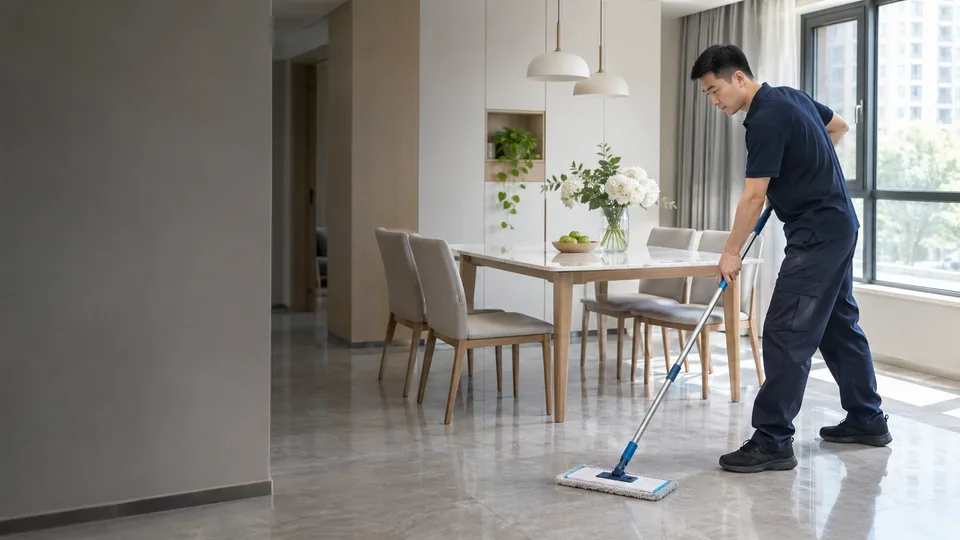
Let’s talk about the conclusion first
List tasks room by room and mark the frequency, explaining the placement of items, material restrictions and completion standards; daily maintenance and special cleaning will be discussed separately.
Walk through the room and list the tasks
Starting from the entrance, go through the kitchen, bathroom, bedroom and public area, and record the tasks you really want someone to take on. Wiping the desktop, folding clothes, handling tableware and placing debris are different tasks. Using the room as a directory can reduce the chance of only thinking about the conspicuous areas and missing out on daily tidying up.
In each space, first pick the few items that most affect your life. There is no need to list all corners as must-dos every day. If there are rooms in the home that are not open to the public, lockers for personal belongings, or areas that need to be handled by the family themselves, point them out at the beginning. A closed door does not necessarily mean access is granted and the scope of services should be clearly stated by the family.
- List tasks by space, and mark areas that should not be entered or moved.
Use frequency to control total workload
Divide tasks into three categories: daily maintenance, periodic arrangement and temporary addition. For example, tidying up after meals may happen frequently, but wardrobe tidying may not be necessary every time. First discuss the frequency based on the actual usage of the home, and then compare it with the service period. You cannot be burdened with an ever-lengthening list every time you arrive at your home.
Matters such as clearing land before moving in, heavy stains, interior appliances and high places should be listed separately to inquire about applicable services. They may involve different time, tools, and conditions than regular household surface cleaning, so don't wait until a service person arrives at your home and assume they should be handled together. The specific scope of work will be confirmed by relevant parties.
- Mark the frequency of tasks and do not mix special cleaning into the name of daily cleaning.
First agree on the rules for items and supplies
When organizing items, it is most likely that both parties will have different understandings. Family members think that it is enough to put them neatly, but others may think that they need to be sorted and emptied. First explain what can be moved, what needs to be asked, and what cannot be discarded; it is not appropriate to make decisions on your own regarding bills, medicines, documents, and items containing private information.
Who prepares cleaning tools and supplies, where they are placed, and which materials have usage restrictions should also be confirmed together. Dispose of special furniture and appliances according to applicable instructions, and do not try unknown products based on experience. When you find that the condition of materials or equipment is unclear, it is more practical to stop the project first and communicate it than to explain the cause of the damage afterwards.
- Store valuable and personal items first, and leave necessary instructions for special materials.
Express completion criteria as checkable results
"Looks comfortable" can express expectations, but it also requires concrete results. For example, items on public countertops are returned to the agreed location, tableware is put away for the day, and daily cleaning is completed on the designated floor. Don’t just give vague requirements at the beginning and only add details at the end to judge whether it is completed.
During the first service, you can review several key areas together to determine whether the omissions in the records are due to unclear scope, lack of time, or the practice needs to be adjusted. Then just communicate according to the list, without having to re-explain the entire house every time. When new items are added to the home, guests come, or usage changes, the corresponding tasks and frequencies will be updated.
- Review the agreed area and results without temporarily adding new items for acceptance.
Take this checklist with you
- List tasks room by room
- Mark the frequency and special items
- Describe item processing boundaries
- Confirm supplies review key points
You may also want to know
If the house area is the same, will the amount of housework be the same?
No. Number of residents, items, cooking and task depth all affect workload, not just square footage.
Can you ask the other party to throw away rarely used items?
Let your family members decide what can be discarded first. Notes, documents and personal belongings should not be handled by yourself.